Model Organisms in Aging Research
Research Models

Model Organisms in Aging Research

Model organisms let researchers study aging under controlled conditions, compare conserved pathways and test interventions across different biological systems.

Overview

Simple systems can reveal fundamental biology.

No single organism captures every feature of human aging. Instead, researchers choose models that make particular questions easier to answer. Short lifespans enable rapid experiments, genetic tools reveal causal pathways, and mammalian models provide physiology that is closer to humans.

The value of model organisms comes from combining these strengths. When a mechanism appears in yeast, worms, flies and mammals, researchers gain evidence that the pathway may be evolutionarily conserved. When results differ, those differences can be equally informative.

Yeast

Saccharomyces cerevisiae

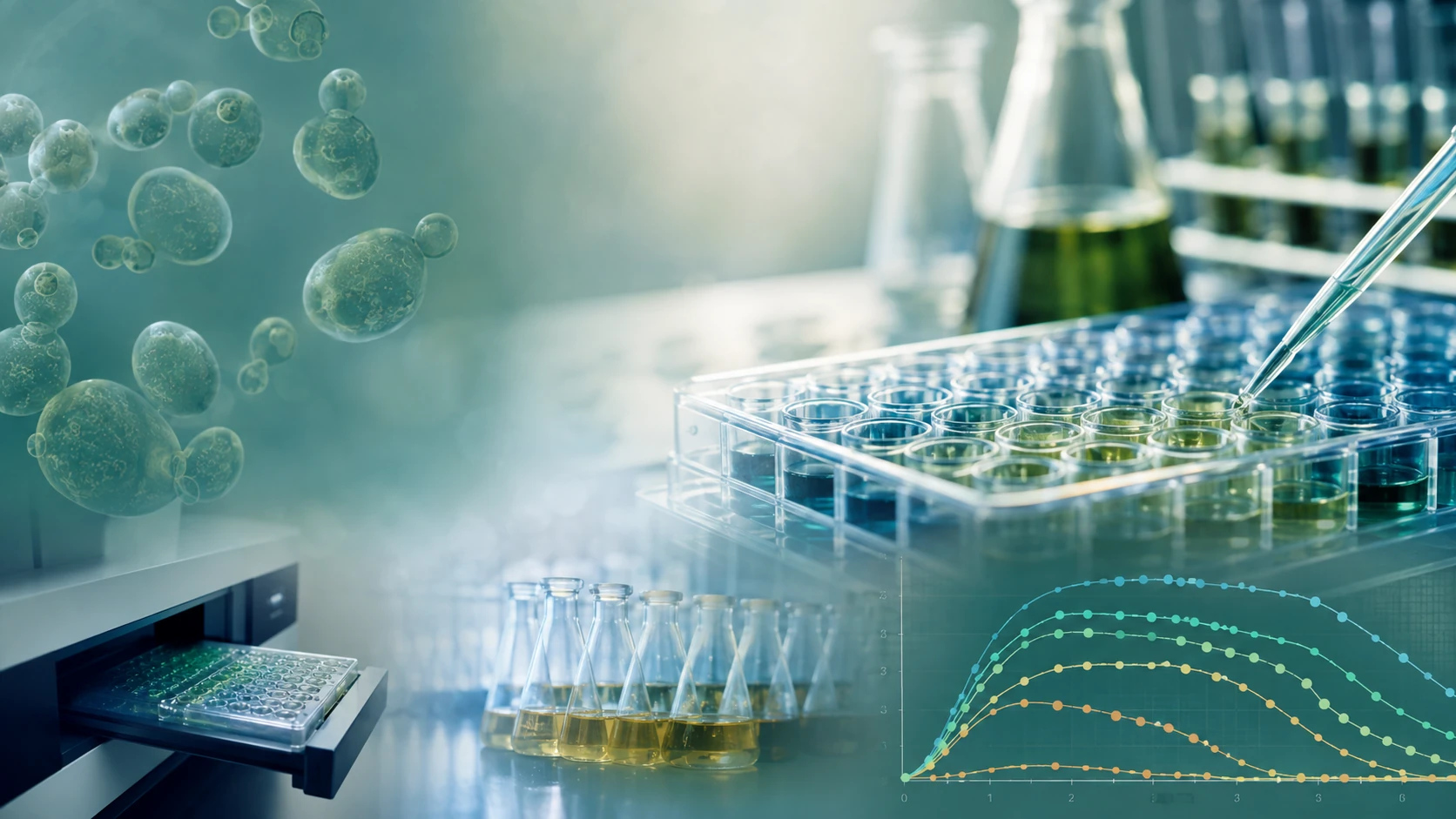
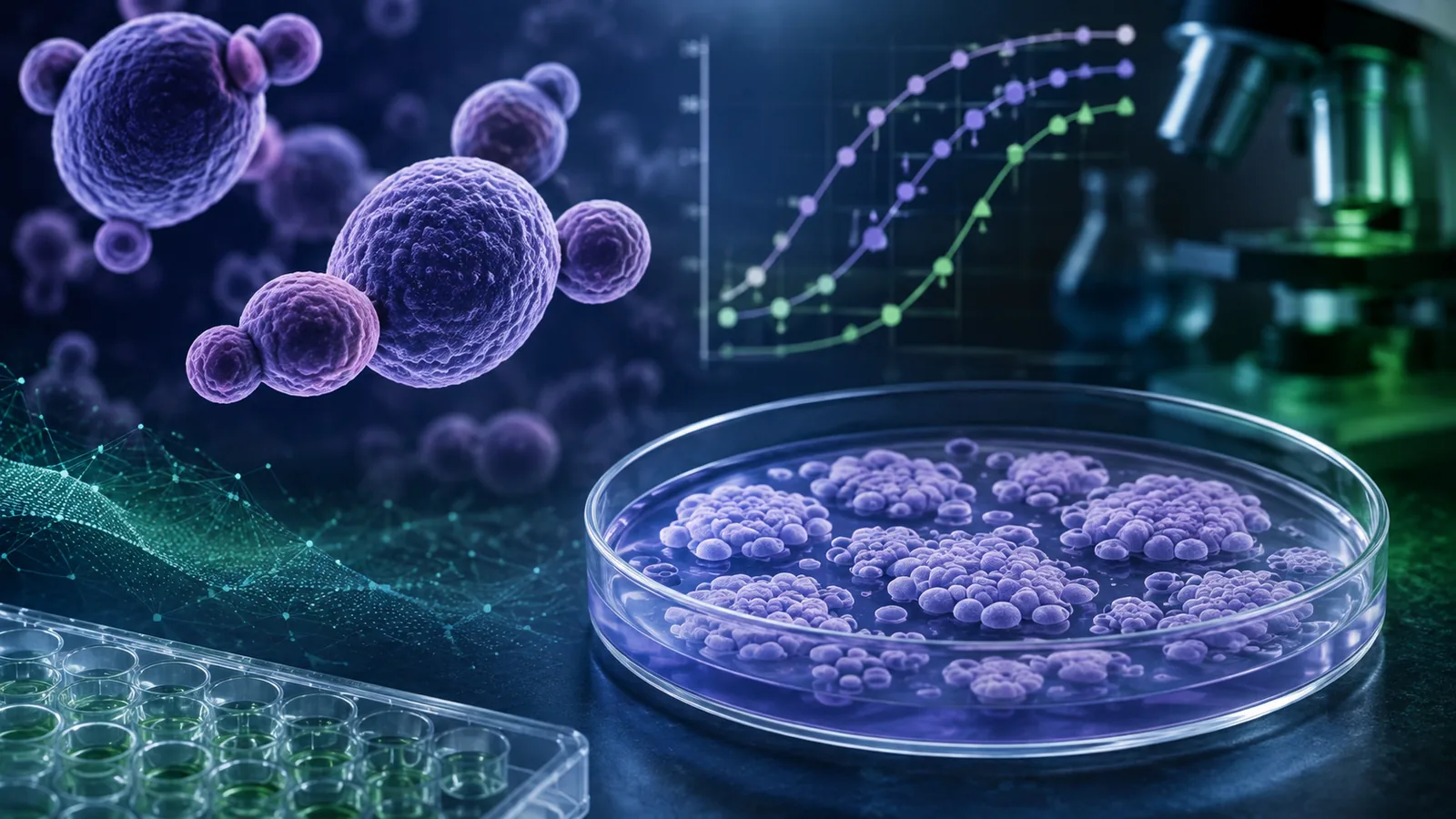
Budding yeast enables high-throughput genetics and two complementary aging paradigms: replicative lifespan, based on the number of daughter cells produced, and chronological lifespan, based on survival in a non-dividing state.
Nematodes

Caenorhabditis elegans

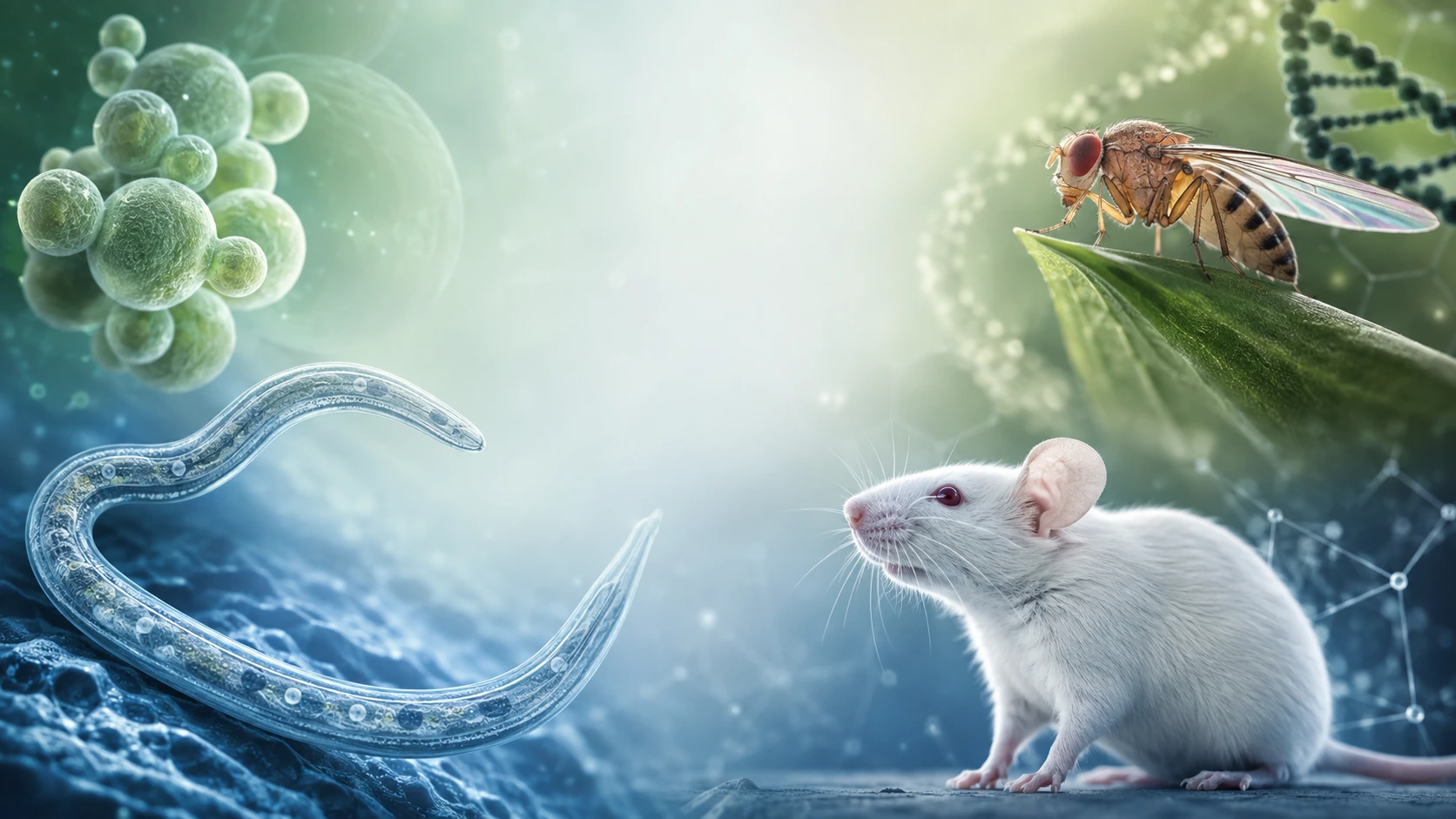
C. elegans has a short lifespan, transparent body and powerful genetic toolkit. It has been central to research on insulin-like signaling, stress responses and genetic control of longevity.

Fruit Flies

Drosophila melanogaster

Drosophila combines rapid generation times with complex tissues, behavior and metabolism, allowing researchers to study aging in a multicellular animal with sophisticated genetics.

Model spectrum

Different organisms answer different questions.

The best model depends on the mechanism, timescale and level of biological complexity being studied. Researchers often move between systems rather than relying on a single organism.

Mammals

Mouse models

Mice provide mammalian organs, immune systems, metabolism and disease processes. Their longer lifespan and higher cost make experiments slower, but they are valuable for testing whether findings extend beyond invertebrate models.

Comparative Biology

Long-lived and unusual species

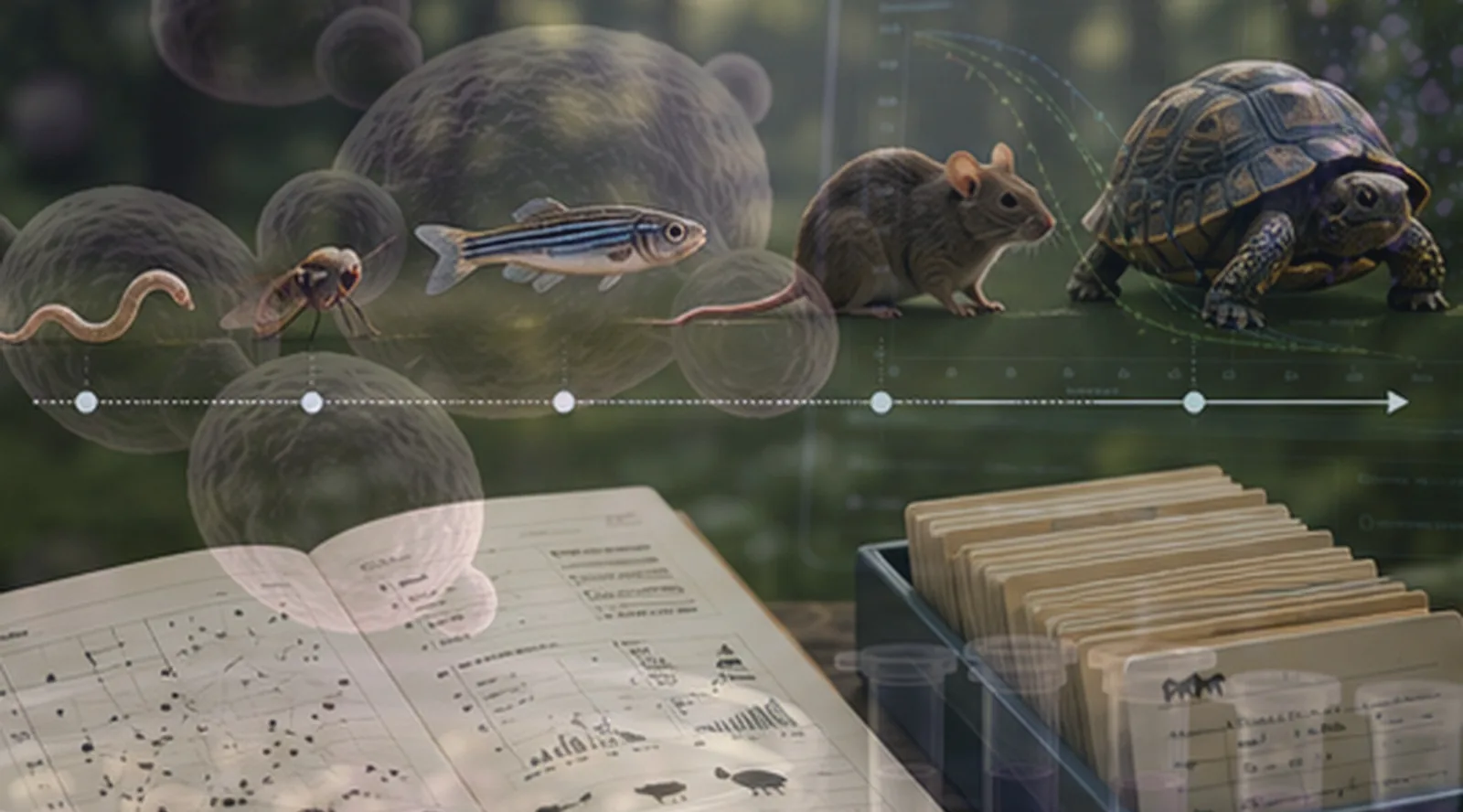
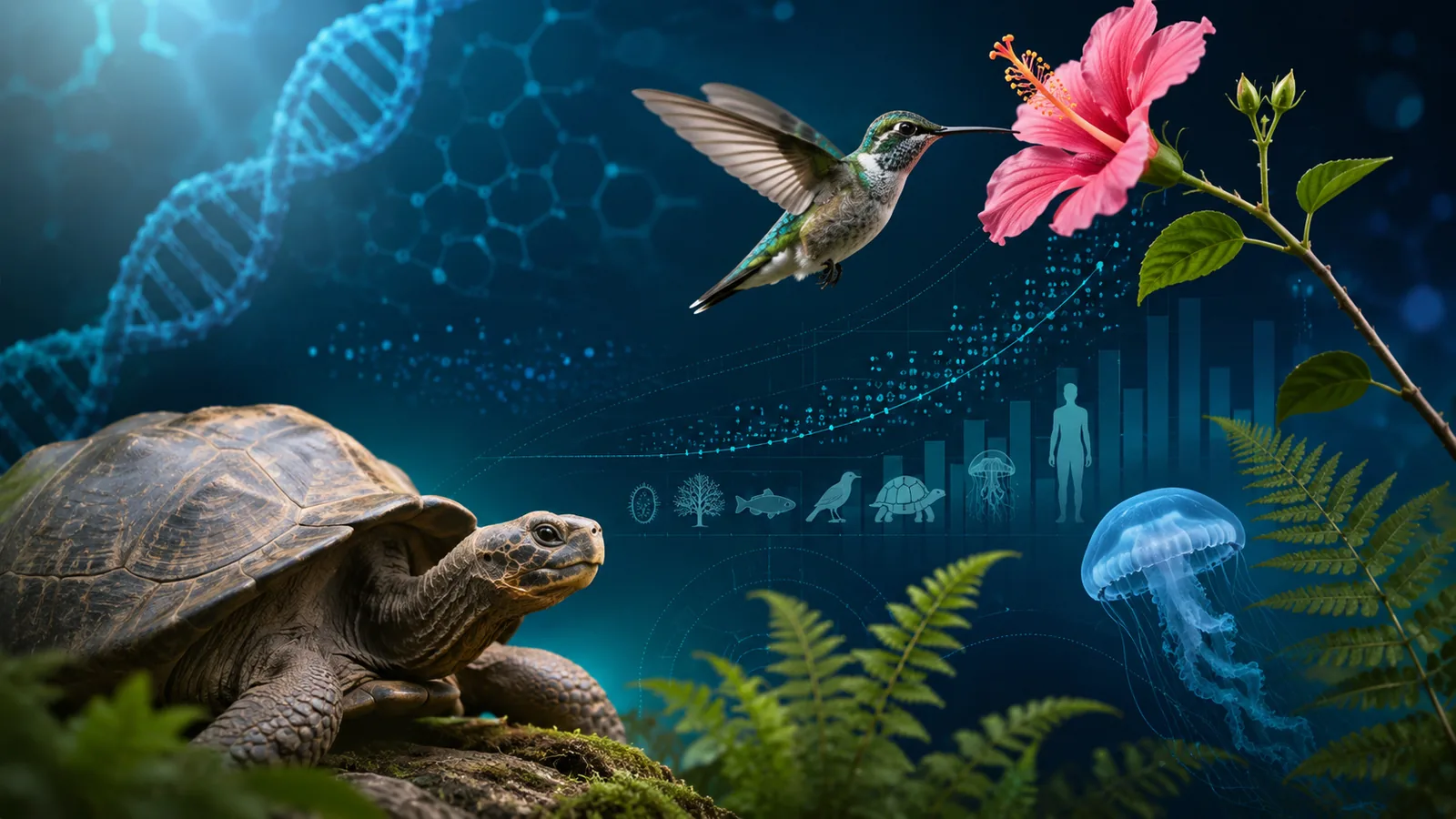
Naturally long-lived animals can reveal alternative solutions to maintenance, cancer resistance and stress tolerance. Comparative studies broaden aging research beyond standard laboratory models.

Cellular Models

Cells, organoids and cultured systems

Cell culture and organoid models allow precise control of molecular conditions and can complement whole-organism studies when researchers need to isolate a specific pathway or tissue response.

Choosing a model

Experimental power comes with tradeoffs

Yeast is fast and genetically tractable but lacks organs. Worms and flies add multicellular complexity while remaining inexpensive and short-lived. Mice offer mammalian physiology but require more time and resources. Human studies provide direct relevance but usually offer less experimental control.

Good research matches the model to the question and avoids assuming that a result in one system automatically applies to another.

Cross-species evidence

Conservation strengthens mechanistic hypotheses

Many aging pathways involve ancient cellular functions such as nutrient sensing, proteostasis, mitochondrial maintenance and stress responses. Finding related effects across diverse organisms can support the idea that a mechanism is conserved.

Translation still requires caution. Lifespan, physiology, environment and intervention doses can differ dramatically, so each step toward human relevance needs its own evidence.

From model to human biology

Translation is a sequence of tests, not a single jump.

Model-organism research is most informative when a finding leads to additional experiments. A pathway discovered in yeast may be examined in worms or flies, then tested in mammalian cells or mice, and eventually compared with human genetics, biomarkers or clinical observations. Each stage asks whether the mechanism remains relevant in a more complex biological context.

Conservation

Shared cellular machinery

Processes such as DNA repair, nutrient sensing, protein turnover and mitochondrial maintenance are ancient enough to be studied across widely separated species.

Divergence

Important biological differences

Organisms differ in anatomy, immune function, reproduction, metabolism and lifespan. These differences can change how an intervention behaves and where translation breaks down.

Triangulation

Combine evidence across systems

Confidence grows when genetics, experiments, comparative biology and human data point toward the same mechanism while also revealing its limitations.

Why multiple models are valuable: A pathway that changes lifespan in several organisms is more compelling than an isolated result, but consistency is not the same as proof of human benefit. Cross-species research is strongest when it identifies a mechanism that can then be tested with increasingly relevant experimental and human evidence.
Sageweb connections

From organisms to tools and data.

Sageweb's historical resources are closely connected to model-organism research, especially yeast and cross-species lifespan observations.