
Understanding Biological Aging
Aging Science

Understanding Biological Aging

Aging is a multi-layered biological process shaped by cellular damage, regulation, metabolism, genetics and interactions between tissues over time.

Overview

Aging is a process, not a single pathway.

Biological aging emerges from changes that accumulate across molecules, cells, tissues and organ systems. Researchers study these changes to understand why function becomes less resilient with time, why age is the largest risk factor for many chronic diseases, and why individuals and species can age at very different rates.

There is no single clock or mechanism that explains every aspect of aging. Instead, many interacting processes influence cellular maintenance, stress responses, metabolism, inflammation, regeneration and communication between tissues. Sageweb organizes these mechanisms into connected topics so readers can move from broad concepts to specific experimental questions.

Cellular Biology

Cellular senescence

Senescent cells enter a durable state of growth arrest while remaining metabolically active. Their secreted signals can influence nearby cells, immune activity and tissue function, making senescence an important area of aging research.

Genome Maintenance

DNA damage and repair

DNA is continually challenged by replication errors, oxidative stress and environmental damage. Aging research examines how repair, chromatin organization and genome stability change over time.

Bioenergetics

Mitochondria and metabolism

Mitochondria generate energy and coordinate stress signaling. Changes in mitochondrial quality control, fuel use and signaling can reshape cellular function across the lifespan.

Core mechanisms

Processes researchers connect to biological aging.

Modern aging biology studies networks of mechanisms rather than isolated causes. Several recurring themes help organize the field and provide a framework for interpreting experiments across model organisms and human studies.

Epigenetics

Regulation over time

DNA methylation, histone modifications and chromatin structure influence which genes are active in a cell. Age-related changes in these regulatory systems can alter cellular identity and stress responses.

Proteostasis

Protein quality control

Cells rely on chaperones, degradation pathways and autophagy to maintain functional proteins. Declining quality-control capacity can allow damaged or misfolded proteins to accumulate.

Regeneration

Stem cells and tissue renewal

Tissues depend on stem and progenitor cells for repair. Researchers examine how stem-cell exhaustion, altered niches and chronic signaling affect regeneration with age.

Nutrient Sensing

mTOR, AMPK and insulin signaling

Nutrient-sensing pathways connect energy availability with growth, repair and stress resistance. Their conservation across species makes them central to experimental longevity research.

Cellular Cleanup

Autophagy and recycling

Autophagy helps cells remove damaged proteins and organelles. Its relationship with metabolism, mitochondrial quality and nutrient signaling links it to multiple aging mechanisms.

Inflammation

Immune changes with age

Persistent low-grade inflammatory signaling is frequently observed with aging. Researchers study how immune remodeling, senescent cells and tissue damage contribute to this state.

Research perspective

Chronological age and biological age are not identical

Chronological age measures elapsed time. Biological age refers to the state of physiological systems and can be estimated in many ways, including molecular signatures, functional measurements and risk models. No single biomarker captures every dimension of aging, so results depend on the method and population being studied.

This distinction is important when evaluating claims about “reversing age.” A change in one biomarker does not necessarily mean that the entire aging process has been reversed or that lifespan will increase.

Experimental biology

Why model organisms matter

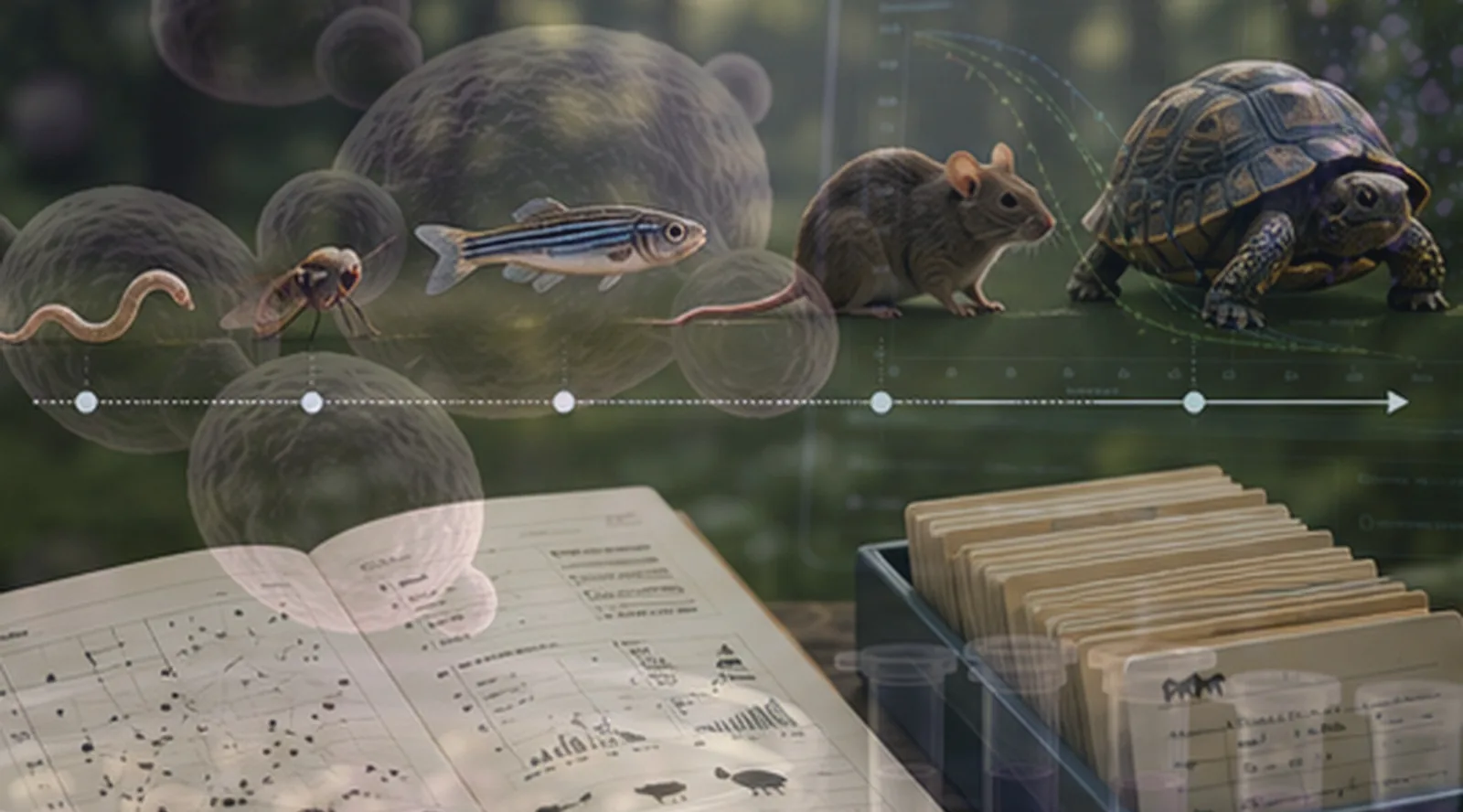
Yeast, worms, flies and mice allow researchers to manipulate genes, environments and interventions under controlled conditions. Because many pathways are evolutionarily conserved, these systems can reveal mechanisms that would be difficult to isolate in humans.

At the same time, findings do not automatically translate across species. Differences in physiology, lifespan and experimental conditions must be considered when moving from model organisms to human health.

Studying aging

How researchers measure a process that unfolds over decades.

Aging cannot be captured by one laboratory value. Researchers combine molecular measurements, tissue pathology, physical function, survival data and longitudinal observations to build a more complete picture. Some studies focus on mechanisms inside cells, while others follow changes in whole organisms over time.

Molecular markers

Signals of biological change

Gene expression, epigenetic patterns, proteins, metabolites and inflammatory signals can reveal age-associated changes, but each marker reflects only part of the underlying biology.

Functional measures

What organisms can still do

Mobility, strength, stress resistance, cognition and organ performance provide another perspective by measuring function rather than molecular state alone.

Longitudinal evidence

Change over time

Following the same individuals or populations can help distinguish stable differences from true age-related trajectories and connect early changes with later outcomes.