How long organisms live
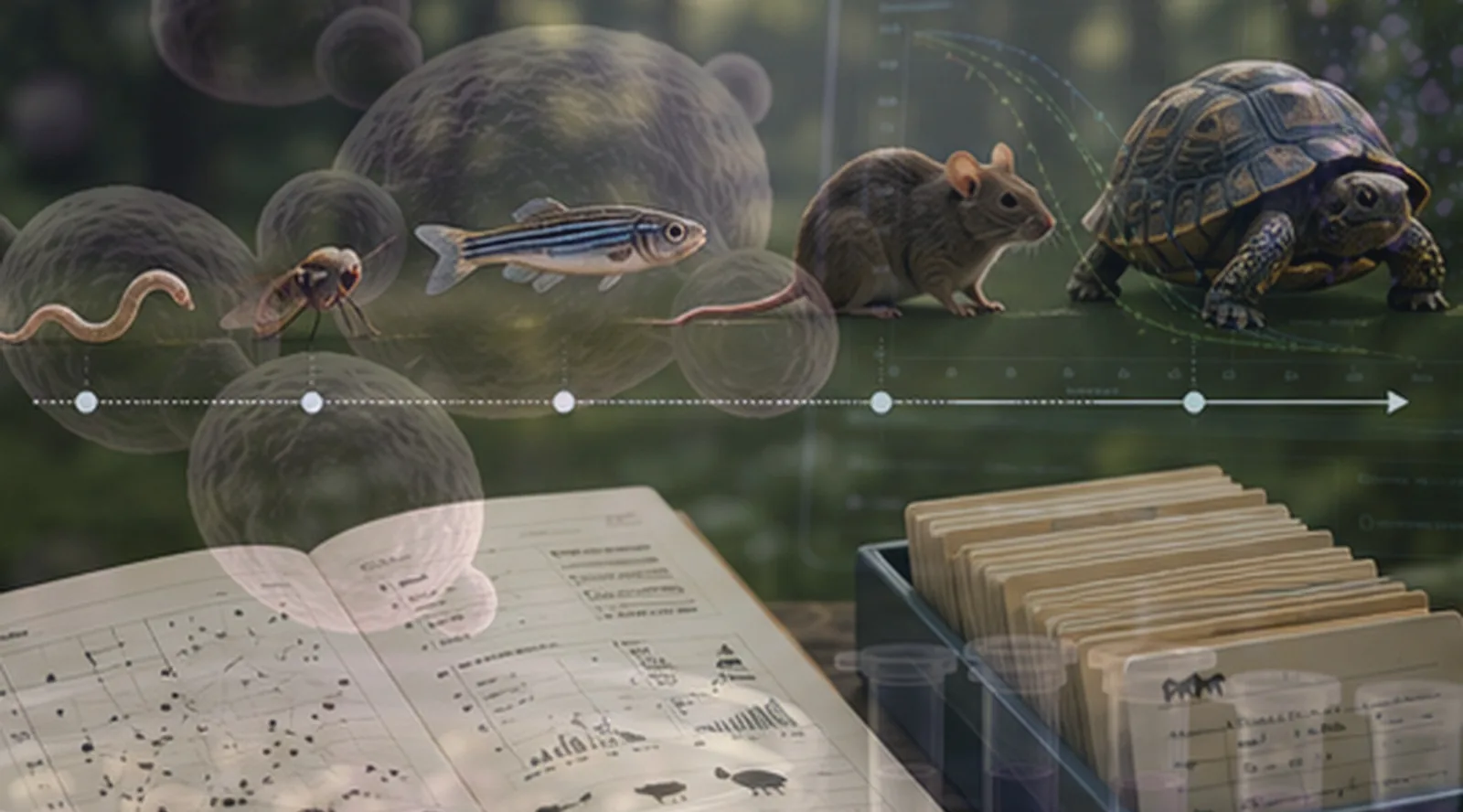
Lifespan research measures survival under defined conditions and compares how genetics, environments and interventions alter mortality patterns.


Longevity science examines the biological and environmental factors that influence survival across the lifespan. It includes research on genetics, metabolism, nutrition, stress resistance, disease risk, behavior and the mechanisms of aging itself.
A central distinction is the difference between lifespan, the length of life, and healthspan, the period of life spent in relatively good health and function. An intervention can affect these outcomes differently, so careful research asks not only whether survival changes but also what happens to function, disease burden and quality of life.
Lifespan research measures survival under defined conditions and compares how genetics, environments and interventions alter mortality patterns.
Healthspan focuses on the years lived with preserved physical, metabolic and cognitive function rather than survival alone.
Differences among species can reveal how body size, metabolism, ecology, repair mechanisms and evolutionary pressures shape longevity.
Longevity is shaped by interacting genetic, biological, behavioral and environmental factors. The relative importance of each factor differs among species and among individuals within a population.
Genes influence maintenance, metabolism, stress responses and disease susceptibility. Experimental models have identified conserved pathways that can modify lifespan when altered.
Temperature, pathogens, toxins, social conditions and other environmental factors can change survival and interact with genetic background.
In humans, physical activity, sleep, nutrition, tobacco exposure and other behaviors influence health outcomes associated with later-life function and mortality risk.
Pathways including mTOR, AMPK, insulin/IGF signaling and sirtuins connect nutrient availability with growth, repair and stress resistance.
Cardiovascular disease, cancer, neurodegeneration and metabolic disease strongly affect human survival. Longevity research therefore overlaps with prevention and healthy-aging research.
Repair capacity, immune function and physiological reserve influence how organisms respond to injury and environmental stress over time.
Researchers study dietary, genetic, pharmacological and environmental interventions to determine whether they alter survival or age-related function. Caloric restriction, nutrient-sensing pathways, exercise and compounds that affect cellular signaling are among the most studied areas.
Evidence must be interpreted by organism, dose, timing and endpoint. A lifespan effect in yeast or mice is not equivalent to demonstrated benefit in humans, and even within one species an intervention can have tradeoffs.
Survival curves, median lifespan, maximum lifespan, hazard rates and functional outcomes describe different parts of the longevity question. Good interpretation requires knowing which metric was measured and how the experiment was designed.
This is one reason lifespan databases and standardized analysis tools are valuable: they help researchers compare observations while retaining the context needed to understand them.
Longevity findings are highly dependent on the system being studied. An intervention that extends lifespan in yeast may reveal a conserved pathway, but it does not establish that the same intervention is effective, appropriate or safe in people. Translational evidence becomes stronger when mechanisms are reproduced across models and supported by human observational or clinical data.
A statistically detectable difference can still be biologically small. Researchers consider the magnitude of the effect alongside uncertainty and experimental conditions.
An intervention might alter lifespan while affecting fertility, growth, body composition or disease in other ways. Healthspan measures help reveal whether longer survival is accompanied by preserved function.
Replication across laboratories, populations or species can strengthen confidence and show whether an effect depends on a particular genetic background or environment.
Move from broad longevity questions into aging biology, experimental models and Sageweb research resources.